Move-out day has a way of making every missed crumb, wall scuff, and dusty baseboard suddenly feel urgent. A solid guide to move out cleaning helps you stay ahead of that last-minute scramble, protect your security deposit, and leave the property in the kind of condition you would want to walk into yourself.
The challenge is not just cleaning well. It is cleaning in the right order, with enough detail to satisfy a landlord, property manager, buyer, or new tenant. If you wait until the truck is loaded and the utilities are halfway shut off, even simple tasks become harder. Good move-out cleaning starts before the final box leaves.
Why a guide to move out cleaning matters
Move-out cleaning is different from regular weekly cleaning. You are not freshening up a lived-in home. You are resetting the space. That means paying attention to hidden dust, inside surfaces, built-up grime, and spots that are easy to overlook when furniture and decor are still in place.
For renters, that can affect how much of the deposit comes back. For homeowners, it can shape a buyer’s first impression. For landlords and property managers, it can speed up turnover and reduce complaints from incoming occupants. The standard is usually higher than people expect, especially in kitchens and bathrooms.
It also helps to be realistic. Some issues are cleaning problems, while others are wear and tear. Small nail holes, faded paint, and old carpet damage may not be fixed with a mop and spray bottle. Knowing the difference keeps your time focused on what cleaning can actually improve.
Start with a move-out cleaning timeline
The easiest way to make this manageable is to break it into stages. About a week before moving, use up food, toss expired items, and pull belongings out of closets, cabinets, and storage areas. This gives you a clear view of what still needs attention.
One to two days before the move, handle cleaning that is easier with furniture still in place, like wiping doors, spot-cleaning walls, and dusting high surfaces. Then, once everything is out, finish the floors, baseboards, inside cabinets, and appliances. Empty rooms reveal more dust than most people expect.
If your schedule is tight, focus first on the areas most likely to be inspected closely. That usually means the kitchen, bathrooms, floors, and any marks or residue that make the space feel neglected. Decorative perfection is not the goal. Clean, sanitary, and move-in ready is.
The supplies that make the job easier
You do not need a huge arsenal, but you do need the basics. A vacuum with attachments, broom, mop, microfiber cloths, scrub sponge, all-purpose cleaner, glass cleaner, degreaser, disinfecting bathroom cleaner, and trash bags will cover most of the job. A magic-eraser style sponge can help with wall marks, but test lightly first so you do not damage paint.
If eco-friendly, family-safe products matter to you, choose formulas that cut grease and soap scum without leaving heavy fumes behind. That can be especially helpful in Florida heat, where closed-up rooms can trap strong chemical smells fast. It is also a better fit if kids or pets are still moving through the home during the process.
Room-by-room move-out cleaning guide
Kitchen
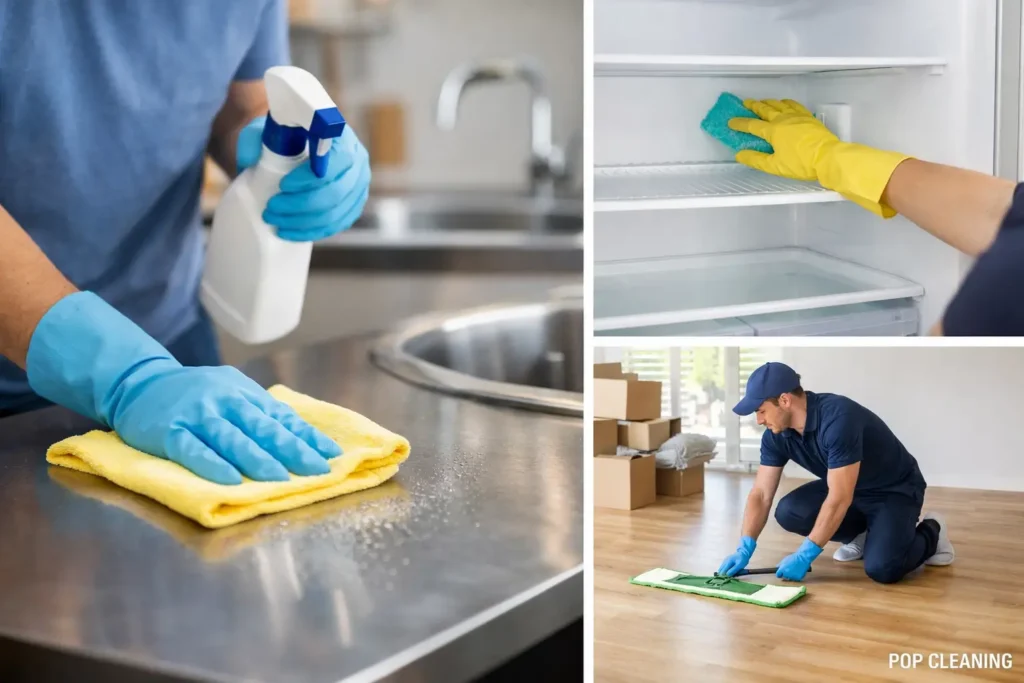
The kitchen usually takes the most time because it collects grease, crumbs, spills, and hidden residue. Start by emptying every cabinet and drawer. Wipe the interiors, including the corners and the top edges of doors where dust settles. Clean countertops, backsplash areas, and the sink, then polish fixtures so they do not show water spots.
Appliances deserve extra attention. The refrigerator should be emptied, shelves removed and washed if needed, and the inside dried completely. Leave it odor-free. The oven and stovetop need degreasing, especially around burners, knobs, and the range hood. Do not forget the microwave interior and the dishwasher filter area if accessible.
A common mistake is cleaning only what is visible at eye level. Inspect under the sink, behind appliances if they can be moved safely, and along baseboards where kitchen dust turns sticky.
Bathrooms
Bathrooms are where people notice detail fast. Soap scum, hard water stains, and grime around fixtures can make an otherwise clean home feel poorly maintained. Scrub the tub or shower thoroughly, paying attention to corners, grout lines, glass doors, and tracks. Clean the toilet inside and out, including around the base.
Wipe mirrors, vanity surfaces, cabinet fronts, and drawer interiors. Disinfect high-touch points like faucet handles, light switches, and door handles. If there is an exhaust fan cover coated with dust, clean that too. It is a small touch that makes a big difference.
If mildew is present, treat it carefully and early. Some staining may not lift completely if it has been there a long time, but addressing it shows the space has been cared for.
Bedrooms and living areas
These rooms are simpler, but they still need detail work. Dust ceiling fans, vents, blinds, windowsills, and baseboards. Wipe doors, switch plates, and closet shelves. Patch and paint may be needed for larger wall damage, but lighter smudges and fingerprints can often be removed with gentle spot cleaning.
Closets matter more than many people think. Empty them fully, vacuum corners, wipe shelves and rods, and check for dust on trim and door frames. An empty closet that looks crisp suggests the whole home was cleaned with care.
Floors
Save floors for last, after all other dust and debris have settled. Vacuum thoroughly, including edges and corners. Hard floors should be mopped with the right cleaner for the material. Avoid over-wetting wood or laminate.
Carpet can be tricky. Vacuuming may be enough for a short stay and light wear, but deeper traffic patterns, pet odors, or stains may require professional treatment. If your lease calls for carpet cleaning, check that requirement ahead of time rather than guessing.
The most commonly missed areas
Even careful cleaners skip certain spots during a move. The tops of doors, door frames, baseboards behind furniture, inside the washer and dryer area, blinds, light fixtures, and the inside lip of trash cabinets are frequent trouble spots. So are drip pans, refrigerator seals, and the space around toilet hinges.
A good final walk-through helps. Stand in the doorway of each room and scan at eye level, then look up and down. Empty spaces make dust, streaks, and forgotten debris easier to spot.
Should you do it yourself or hire help?
It depends on your timeline, energy, and the condition of the property. If the home has been maintained well and you have a full day to work, a DIY move-out clean may be enough. If you are managing a long-distance move, balancing work and family, or facing a larger home with built-up grime, professional help can save time and reduce stress.
This is especially true when expectations are high. Landlords, property managers, and buyers often notice details that tired movers miss. A professional team can also bring consistency to the job, which matters when you want fewer surprises after inspection.
For Southwest Florida residents, that can be especially helpful during busy moving seasons, vacation rental turnovers, or summer heat when cleaning a vacant property becomes more draining than expected. A dependable local company like POP Cleaning can take that final deep-cleaning burden off your list and help you leave the space looking ready for its next chapter.
How to know the job is finished
The home should feel empty, fresh, and intentionally cared for. Cabinets and drawers should be clean inside. Appliances should be free of food, grease, and residue. Bathrooms should look sanitized, not just wiped down. Floors should be free of dust along the edges, not just in the middle.
It also helps to take photos after cleaning if you are a renter. That gives you a record of the condition you left behind. If there is a checklist from your lease or property manager, use it. Their priorities may be more specific than your own.
Move-out cleaning is one of those jobs that rewards method more than speed. When you work from top to bottom, room by room, and leave floors for last, the whole process becomes far less overwhelming. A little planning turns a stressful final chore into a clean handoff, and that peace of mind is worth carrying with you to your next place.