A bathroom can look clean and still hold onto the germs you actually want gone. That is why a Step-by-Step Guide to Disinfecting the Bathroom matters – not just for appearances, but for a healthier home, better odor control, and more peace of mind.
Disinfecting is different from basic cleaning. Cleaning removes dirt, soap scum, and buildup. Disinfecting is the step that kills bacteria and viruses on hard surfaces. If you skip the first part and go straight to disinfectant, you often get weaker results because grime can block the product from doing its job.
Before You Start, Gather the Right Supplies
You do not need a long list of products, but you do need the right ones. A family-safe bathroom disinfectant, microfiber cloths, a scrub brush, toilet brush, gloves, and a mop or disposable floor cloths will handle most bathrooms well. Keep separate cloths for the toilet area and the sink or mirror area so you do not spread germs from one spot to another.
Always read the label on your disinfectant. The contact time matters. Some products need the surface to stay wet for several minutes before they actually disinfect. Wiping too soon is one of the most common mistakes people make.
Step-by-Step Guide to Disinfecting the Bathroom
Start by opening a window or turning on the exhaust fan. Good airflow helps with both comfort and safety, especially when using disinfecting products in a smaller space.
Next, remove rugs, towels, trash, and countertop items. A clear bathroom is easier to clean thoroughly, and you are less likely to miss the areas where moisture and bacteria tend to collect. Shake out washable rugs and set towels aside for laundering.
Clean first, then disinfect. Wipe down counters, sinks, and the outside of the toilet to remove dust, hair, toothpaste, and soap residue. If the tub or shower has visible buildup, scrub that away before applying disinfectant. This step takes a little extra time, but it is what makes the disinfecting step effective.
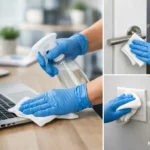
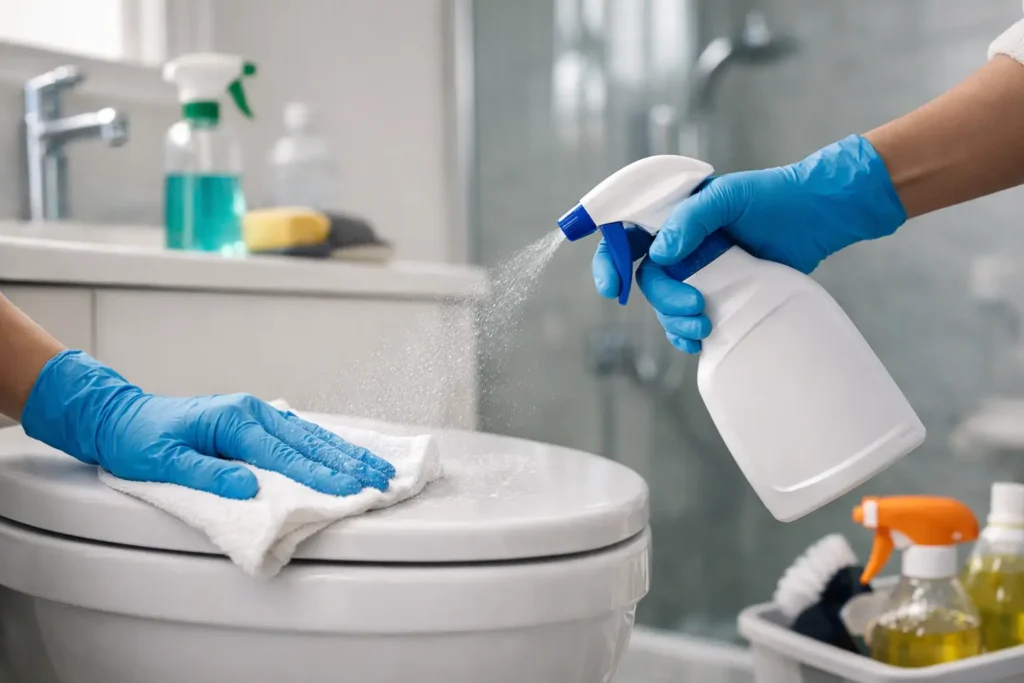
Move to high-touch surfaces right away. Faucet handles, flush levers, light switches, door handles, cabinet pulls, and toilet seats should all be disinfected carefully. These are the places people touch constantly and often overlook because they do not always look dirty.
For the toilet, work from cleaner areas to dirtier ones. Disinfect the tank handle, lid, seat, and outer bowl first. Save the inside of the bowl for last, using a toilet cleaner and brush. Let the product sit as directed before scrubbing and flushing. Using the same cloth on the toilet base and then on the sink is a fast way to spread bacteria, so keep those tasks separate.
The sink and counter come next. Pay close attention to the faucet base, drain area, and backsplash, where water spots and residue build up quickly. Mirrors do not usually need disinfectant unless they are heavily touched, but they should still be cleaned so the whole room feels finished.
In the shower or tub, focus on surfaces that stay damp. Damp corners, grout lines, shelves, and door tracks are more likely to collect mildew and residue. Not every shower needs full disinfection every time, but if someone in the home has been sick or the bathroom gets heavy daily use, it is worth being more thorough.
Finish with the floor. Start in the farthest corner and work your way out. The area around the toilet deserves extra attention because small splashes and drips are common, even in tidy homes. A freshly disinfected floor helps the entire bathroom feel truly clean.
Common Mistakes That Reduce Results
The biggest mistake is rushing. If a disinfectant needs five or ten minutes of dwell time, a quick spray and wipe will not give you the protection you expect. Another issue is overusing product. More is not always better, and excess cleaner can leave sticky residue that attracts more dirt.
It also helps to avoid mixing products. Combining cleaners can damage surfaces or create unsafe fumes. Stick with one product at a time, follow the label, and rinse surfaces if the directions call for it.
How Often Should You Disinfect?
That depends on who is using the bathroom and how often. In a busy family home, disinfecting high-touch surfaces several times a week makes sense, while a deeper full-bathroom disinfecting routine may be needed weekly. Guest bathrooms can often be done less often unless they are used regularly. If someone has been sick, daily disinfecting of shared bathroom surfaces is a smart move.
For homes, rentals, and offices that need a more dependable routine, professional help can make a real difference. A detail-focused local team like POP Cleaning can handle the buildup people do not always have time to tackle, while using eco-friendly, family-safe products and backing the work with a 24-hour satisfaction guarantee.
When a Bathroom Needs More Than a Quick Clean
If odors keep returning, mildew shows up around grout or caulk, or surfaces still feel sticky after a wipe-down, the bathroom likely needs more than maintenance cleaning. Deep cleaning and disinfection work best together when buildup has had time to settle in.
A properly disinfected bathroom should feel fresh, not just look better from the doorway. When you clean first, use the right product correctly, and focus on the most touched surfaces, you get results that last longer and help your whole space feel more comfortable.