
A lot of business owners ask for “cleaning” when what they really need is a specific kind of support. That is where the office cleaning vs janitorial service question matters. The two overlap, but they are not always the same, and choosing the right one can affect cost, appearance, employee comfort, and how smoothly your day runs.
If you manage a small office, medical-adjacent workspace, storefront back office, or shared professional suite, the difference usually comes down to frequency, scope, and expectations. One service may be ideal for keeping a workplace polished on a regular schedule. The other may be better for day-to-day upkeep that keeps everything functioning between deeper cleanings.
Office cleaning vs janitorial service: what is the difference?
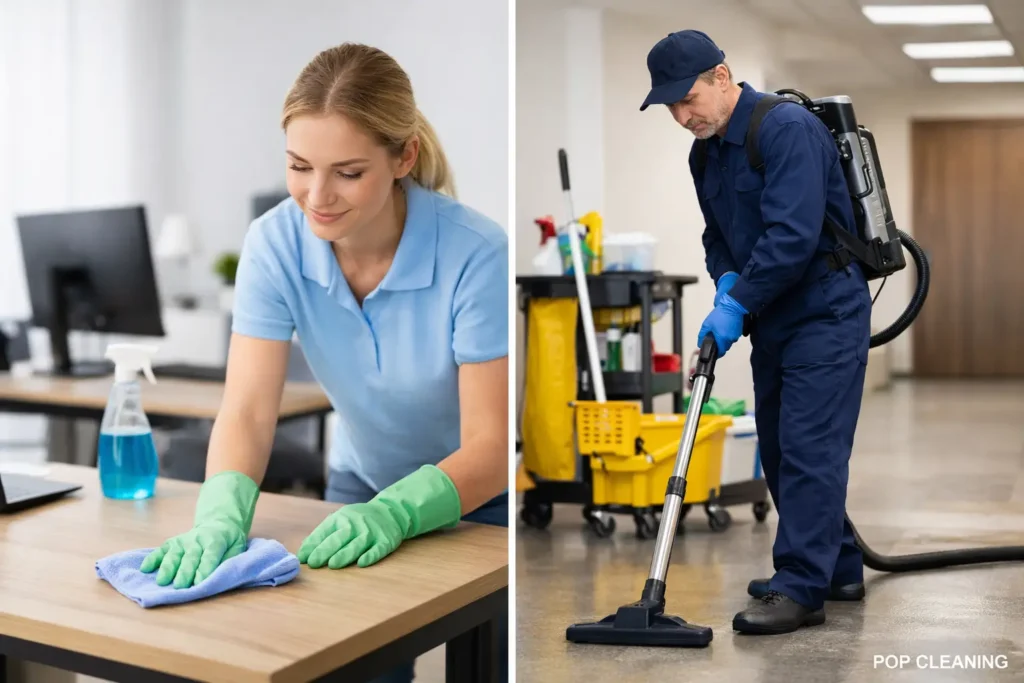
In simple terms, office cleaning usually refers to scheduled cleaning focused on making an office look, feel, and smell clean. That often includes tasks like vacuuming, mopping, dusting, wiping desks or common surfaces, sanitizing restrooms, emptying trash, and cleaning break areas.
Janitorial service often refers to ongoing maintenance support, sometimes performed more frequently and sometimes during business hours or in multiple shifts. Depending on the provider and the building, janitorial work can include cleaning tasks, but it may also extend to restocking paper products, monitoring restrooms, handling minor spills during the day, and keeping high-traffic areas under control.
That is why the terms are sometimes used interchangeably and sometimes not. A smaller company may call its recurring office cleaning “janitorial service.” A larger facility may use “janitorial” to mean broader custodial support with constant upkeep. The label matters less than the actual scope of work.
When office cleaning is the better fit
Office cleaning is usually the right choice when your business needs reliable, professional cleaning on a set schedule without full-time on-site support. For many small and midsize offices, that means service after hours a few times a week or even once weekly, depending on traffic.
This option works well when your biggest priorities are presentation, sanitation, and employee comfort. If you want clean floors, fresh-smelling restrooms, tidy conference rooms, and a break room that does not look neglected by Wednesday, office cleaning covers those needs well.
It is also a strong fit when you want minimal disruption. A local team can come in after the workday, follow a consistent checklist, and leave the space ready for the next morning. That is especially useful for businesses that do not want staff distracted by carts, equipment, or active cleaning during open hours.
For smaller professional spaces in places like Fort Myers or Cape Coral, office cleaning is often the more practical and cost-effective option. Many offices simply do not need a janitor on-site throughout the day. They need dependable recurring service, attention to detail, and a team that shows up when promised.
When janitorial service makes more sense
Janitorial service is often the better fit when your facility has steady foot traffic, extended hours, or ongoing messes that cannot wait until evening. Think larger office buildings, schools, multi-tenant facilities, medical-adjacent spaces, or businesses with public restrooms used all day.
In those settings, cleanliness is not just about the next-day reset. It is about maintaining standards hour by hour. Restrooms may need restocking before lunch. Lobby floors may need spot cleaning after rain. Trash may need to be removed before it overflows. Those are janitorial needs.
This kind of service can also make sense if your business has multiple shared spaces that wear down quickly. If people are constantly moving through kitchens, waiting areas, and entrances, appearance drops fast between standard cleanings. Janitorial support helps prevent that slide.
The trade-off is that broader coverage usually comes with a different pricing structure and a different level of coordination. You are not just booking a cleaning visit. You are arranging ongoing facility support.
What both services usually include
There is a reason people confuse the two. Both office cleaning and janitorial service can include very similar core tasks. Sweeping, vacuuming, mopping, trash removal, restroom sanitizing, and surface wipe-downs often show up in both.
The real difference is not always the task itself. It is how often it happens, when it happens, and whether the service is focused on cleaning appointments or ongoing maintenance.
For example, restroom cleaning may be included in both. In an office cleaning plan, it may happen three evenings a week. In a janitorial plan, it may happen nightly with supply checks during the day. Trash removal may also appear in both, but janitorial service may include multiple pickups if a space generates more waste.
That is why comparing proposals line by line matters. A lower quote is not automatically the better value if it leaves out important details like break room sanitizing, touchpoint disinfection, or restocking consumables.
How to choose the right service for your business
The best choice starts with how your space is used. If your office has a stable staff, predictable hours, and no major daytime messes, office cleaning is probably enough. If your space stays busy all day and cleanliness affects customer impressions in real time, janitorial service may be worth the added support.
It also helps to think about your goals. Some businesses are mainly trying to protect a professional appearance. Others are trying to reduce germs on shared surfaces, keep restrooms guest-ready, or support employee health in close working quarters. Those goals can shift the type of service you need.
Budget matters too, but not in a vacuum. Paying for daily janitorial support in a low-traffic office can be more than you need. On the other hand, trying to save money with occasional office cleaning in a high-traffic building can create complaints, odors, supply shortages, and a poor first impression.
A good cleaning partner will help you match the service to the space instead of pushing a one-size-fits-all plan. That means asking about square footage, traffic patterns, restrooms, flooring, break areas, and whether you need daytime attention or after-hours care.
Questions to ask before hiring either service
Before signing any agreement, ask what is included in the routine visit and what counts as extra. Ask how often restrooms, floors, and high-touch surfaces are addressed. Ask whether supplies are restocked, whether the crew works after hours, and how quality is checked.
You should also ask how the company handles issues if something is missed. A clear satisfaction guarantee matters because consistency matters. Clean once is easy. Clean well every week is what actually helps your business.
Another useful question is whether eco-friendly, family-safe products are used. That can be especially relevant in offices with children visiting, employees with sensitivities, or shared workspaces where strong chemical odors linger.
Office cleaning vs janitorial service: why the wording can be misleading
Part of the confusion comes from the fact that cleaning companies use these terms differently. One provider may advertise janitorial service when they really mean recurring office cleaning. Another may reserve the word janitorial for large commercial accounts with daytime maintenance needs.
That is why business owners should focus less on the title and more on the plan. What days will the team come? What exactly gets cleaned? Is the service built for presentation, sanitation, maintenance, or all three? How flexible is the schedule if your needs change?
For many local businesses, a tailored office cleaning plan delivers everything they need without paying for a larger janitorial model. For others, especially those with heavier traffic or public-facing facilities, janitorial support is the smarter long-term choice.
The right answer is not about picking the more impressive label. It is about choosing the service that keeps your workplace consistently clean, comfortable, and ready for the people who use it every day.
If you are comparing options, the simplest next step is to walk through your space as if you were a customer, an employee, and a manager all at once. The spots that bother each of those people will tell you very quickly whether you need scheduled office cleaning, fuller janitorial support, or a plan that sits somewhere in between.